Dating from the sixteenth century, the Zitadelle Spandau (Spandau Citadel) is located a short walk from the second-last stop on the U7, Berlin’s longest and most interminable underground line. The line’s terminus – the old town of Spandau – is a strange confection of medieval buildings, postwar social housing, and upmarket waterfront apartments. After more than six years in the city, I have only travelled this far on the U7 once before. Because while Spandau is technically still Berlin, it’s also very much its own place. All the better for putting things that do not belong elsewhere.
The Zitadelle is an impressive collection of buildings, partially moated within a lush park. It includes Berlin’s oldest building, the Juliusturm (Julius Tower), dating from around 1200. Used to store the reparations from the Franco–Prussian war, the tower’s name became a colloquial term to describe any surplus in the state treasury. In summertime, the Zitadelle is often used for outdoor concerts that are held on the cobblestoned central square. When I visited, muscled workers were hastily disassembling fences left over from an all-ages festival the day before. Nothing much was happening now. Tourists in comfortable shorts with praktisch backpacks wandered through the buildings, looking mostly underwhelmed.
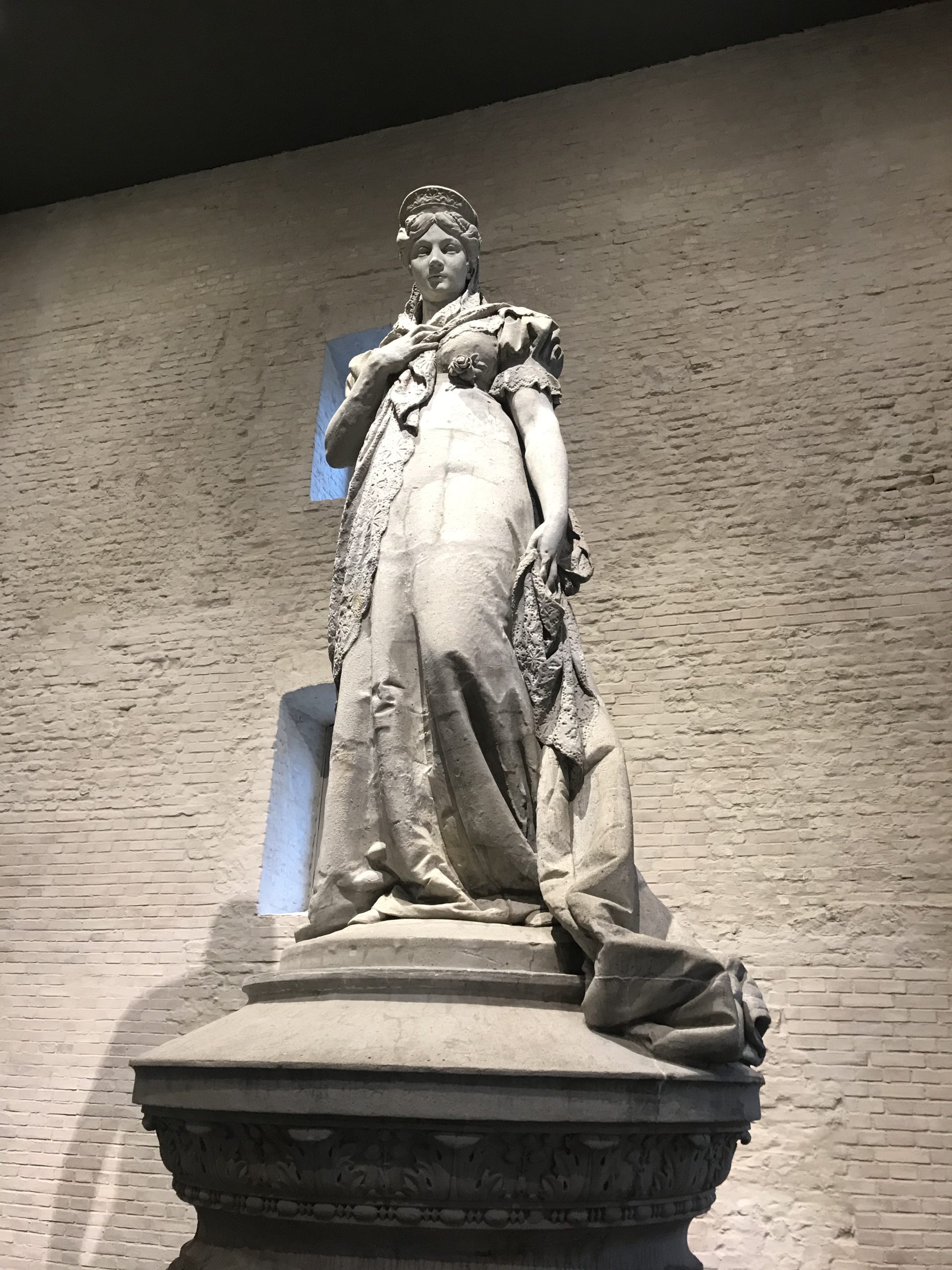
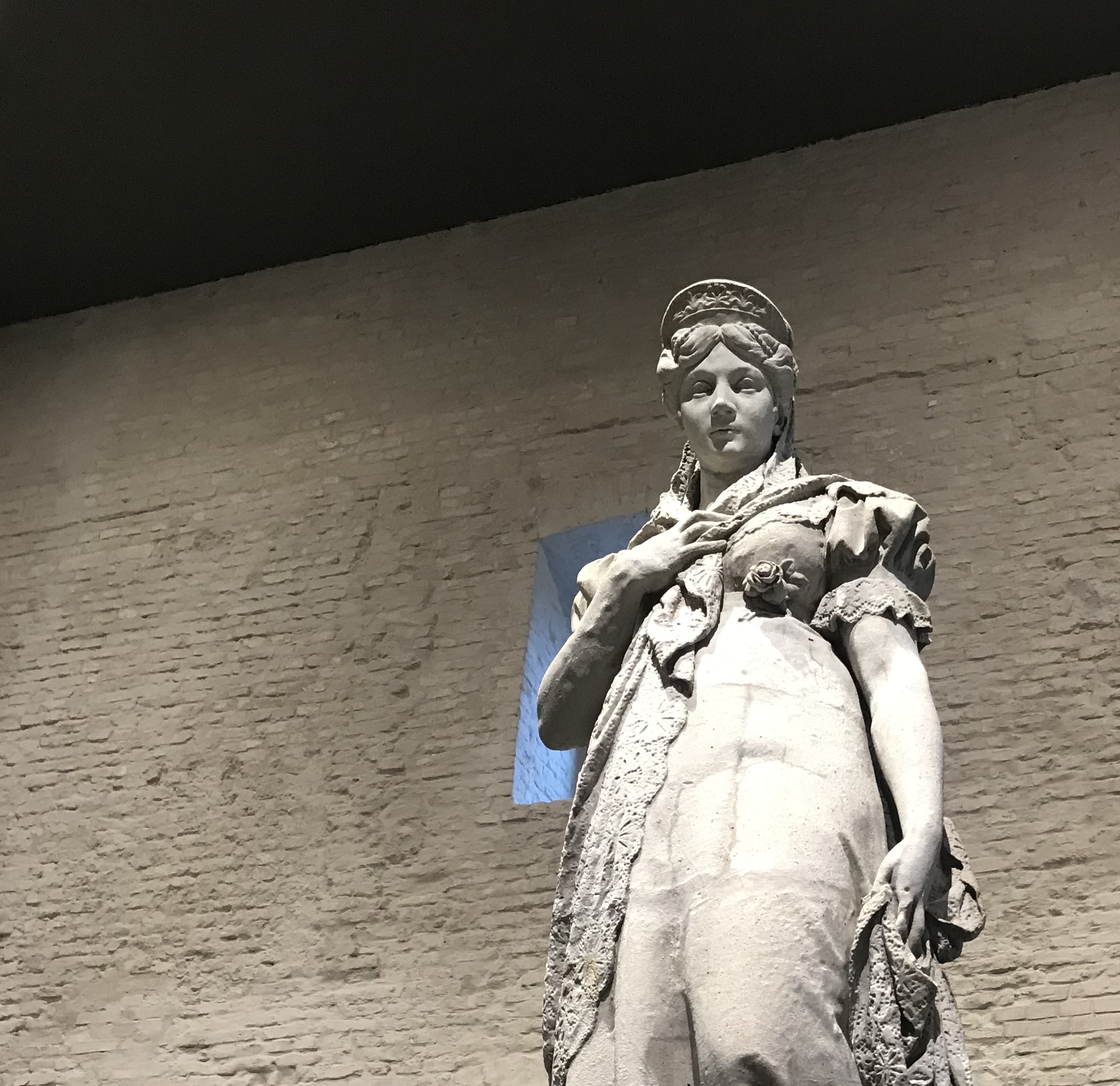
Erdmann Encke, Monument of Queen Luise, 1880 (copy 1986). Courtesy of Stadtgeschichtliches Museum Spandau.
Since April 2016, the Zitadelle is also home to the exhibition Enthüllt, [1] a heaving collection of public sculptures from the surrounding city all of which – for various reasons – are no longer suitable for living alongside us. Curated by the Museum’s Director, Dr Urte Evert, the exhibition is about systemic change – Systemwechsel – and collective memory. At successive points in Berlin’s history, new powers set upon new forms of self-representation, doing away with what had been, both figuratively and literally, set in stone. This meant the old images had to be erased – whether they were images of Prussian militarism, National Socialist ideals, or Soviet strong men. And that is what is preserved at the Zitadelle: a who’s-who of once extremely important white men (and Queen Luise, wife of Kaiser Friedrich Wilhelm III) dating back to the Kaiserzeit, pulled back from the murk of time and into the twenty-first century public sphere.
The artefacts are organised chronologically across a set of adjoining rooms. In the first is a series of statues commissioned by Kaiser Friedrich II celebrating a number of generals for their role in the defeat of Napoleon. These are notable for having been the first artworks commissioned by a Kaiser (Emperor) to memorialise non-royals, but they are otherwise formally unremarkable. It is hard to understand why they needed to be removed. The second hall is crowded with the remains of thirty-two marble statues gifted to Berlin by Germany’s last Kaiser, Wilhelm II (1859–1941), as an opportunity to linger and reflect on his glorious Hohenzollern dynasty. Failing to appreciate his largesse, the site (the Siegesallee) was colloquially known as die Puppenallee, roughly translated as doll or mannequin avenue. After World War II, the Allies didn’t appreciate the statues’ taint of Prussian militarism and buried them at Schloss Bellevue, now home to Bundespräsident, Frank-Walter Steinmeier. Here, their crumbling oversized likenesses appear smushed together. All that’s left of Kant are his shoulder blades.
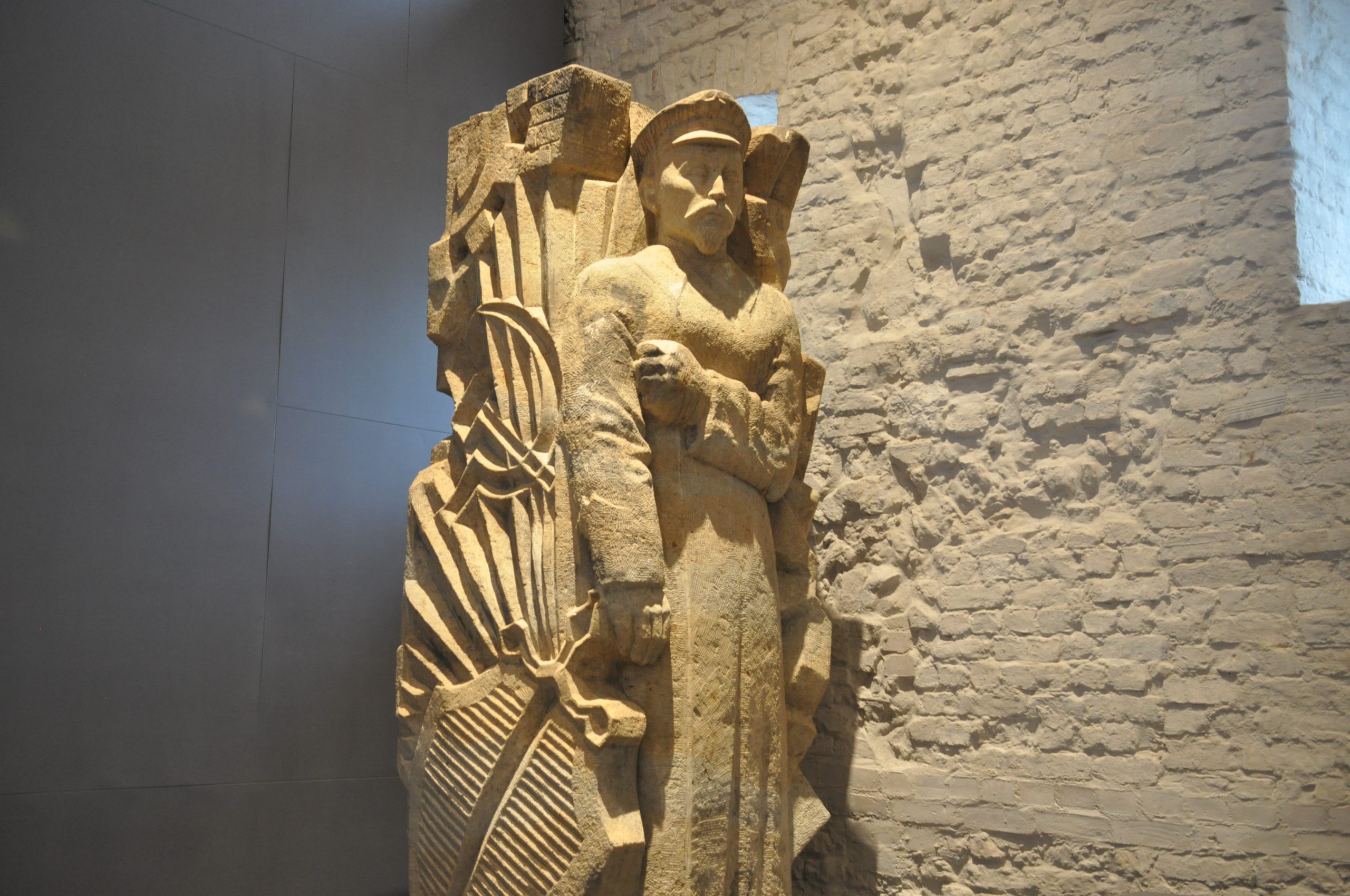
Sculpture of ‘Iron Felix’ Dzerzhinsky. Courtesy of Stadtgeschichtliches Museum Spandau.
The following rooms contain statues erected during the Weimar Republic and National Socialist periods, as well as some from the DDR. Though they are documented in various videos and supporting texts, no real monuments from former West Berlin have ended up here; since the city’s reunification, these are mostly still out among us. [2] Of course, some former DDR sculptures clearly had to go. I’m thinking in particular of a sculpture of ‘Iron Felix’ Dzerzhinsky, founder of the Soviet secret police and architect of the Red Terror that followed the 1917 revolution – erected counter to all reason at the late date of 1987. The same self-evidence cannot be claimed for the glass, perfectly anodyne modernist sculpture put in the Schinkel-designed Neue Wache memorial building on Unter den Linden to commemorate twenty years of the DDR. [3] Personally removed by then Chancellor Helmut Kohl, in this instance, it seems more indicative of a victorious impulse, one that seeks to stifle and override the past.
Stories spill forth from these objects. One of the centrepieces is the neoclassical sculpture Zehnkämpfer (Decathlete, 1936) by Arno Breker – Hitler’s favourite sculptor – of a muscular naked athlete, the perfect embodiment of Aryan masculinity. After the war, the occupying British found the sculpture, thought it schön, and gave it pride of place atop a tall column in the garden of their nearby Spandau barracks. It was only when the road was being widened in 2006 that they uncovered the inscription at its base – unfortunately, it was from der Führer himself. Remarkably, a larger version of the sculpture still stands at the Olympiastadion (Olympic Stadium) in nearby Charlottenburg.
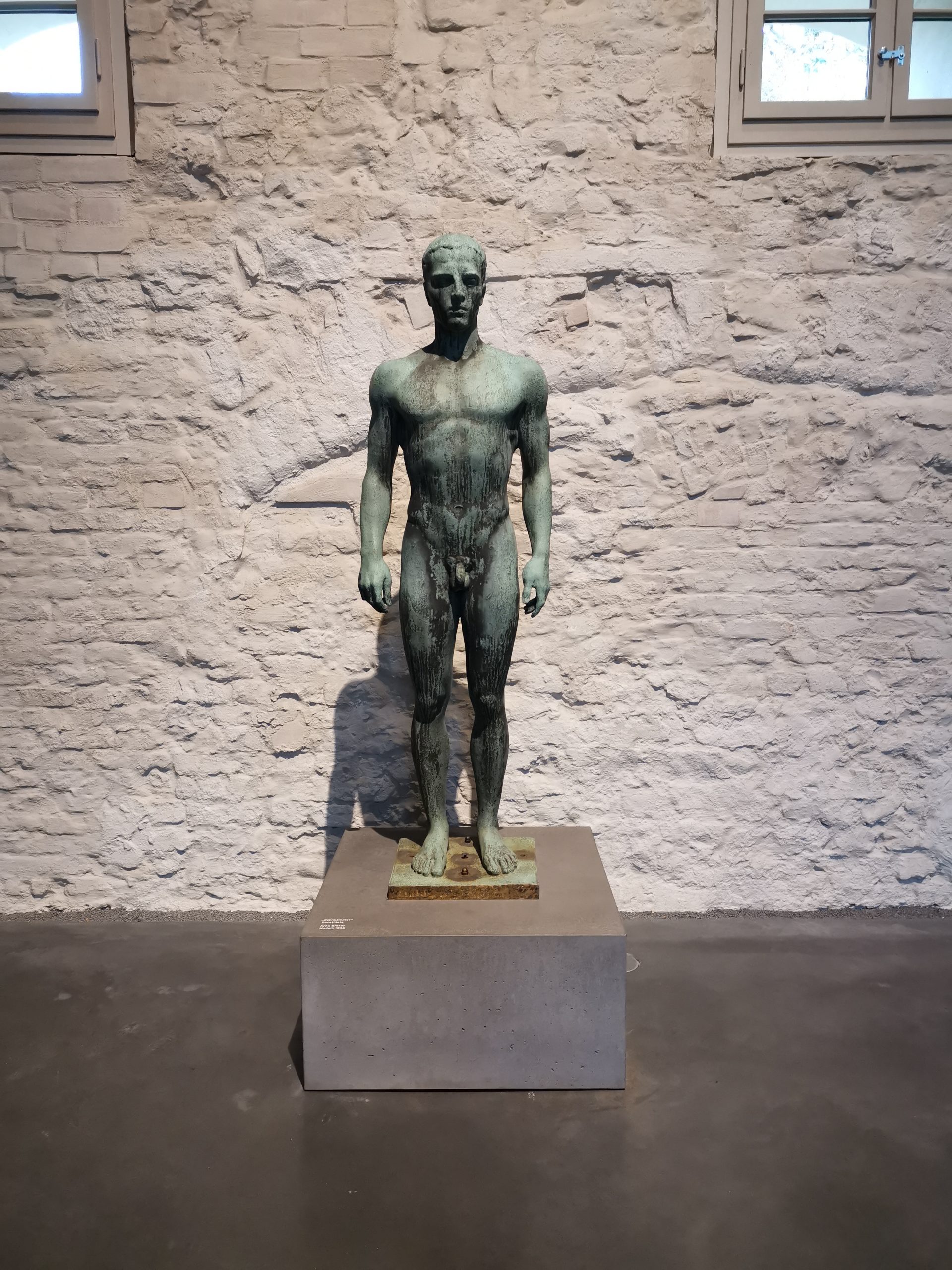
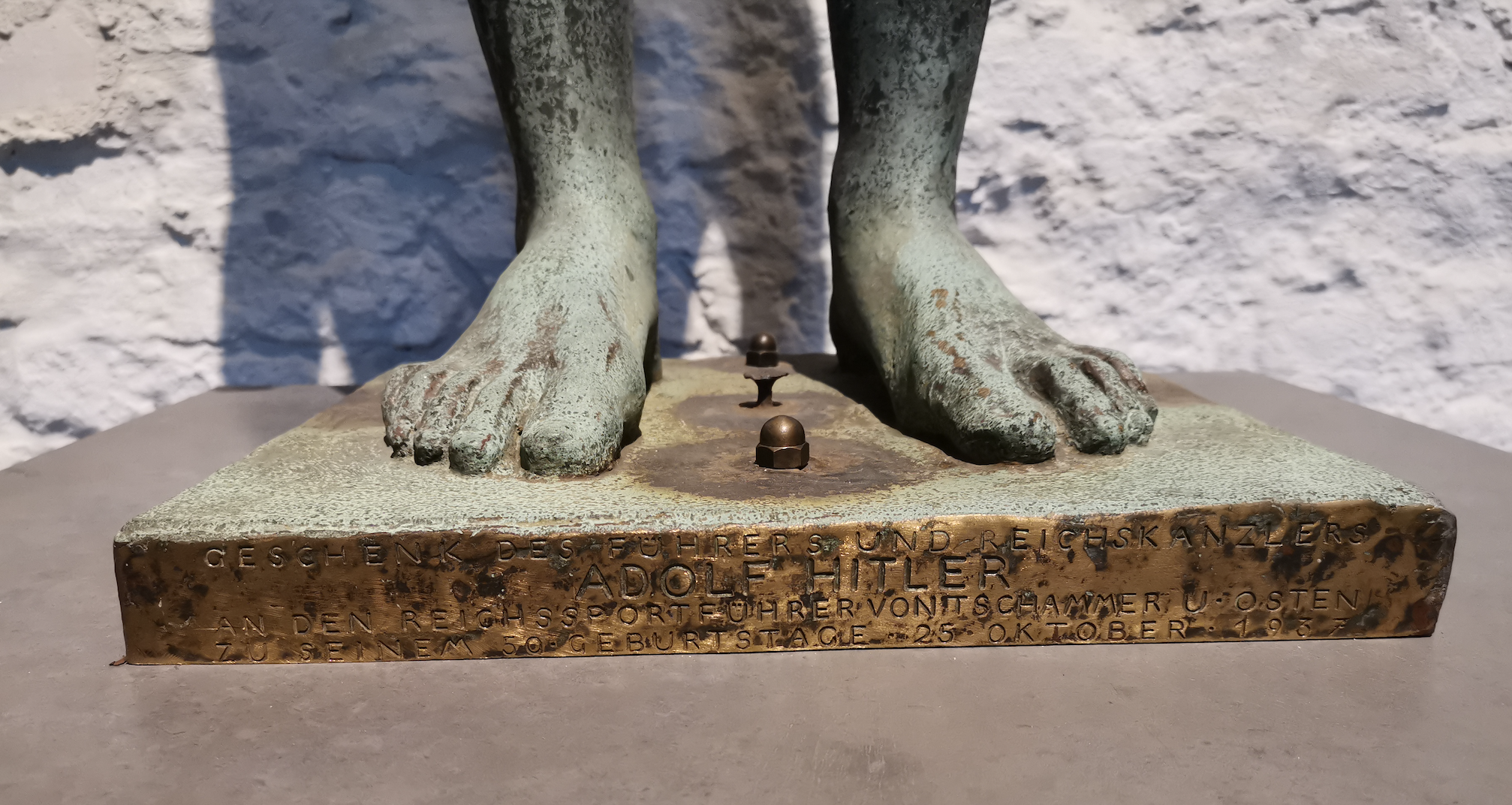
Arno Breker, Zehnkämpfer (Decathlete), 1936. Courtesy of Stadtgeschichtliches Museum Spandau.
Statues were in the main a little too small fry for the Nazis, who preferred the more ambient terror of architecture and spectacle. Added to this, many were melted down to make weapons during the last desperate days of the war. As a result, there weren’t many Nazi sculptures to decommission in Berlin. One exception, also included here, is a stone sculpture with Nazi insignia that was hastily toppled and buried as the Red Army marched into Berlin. Knowing the game was up, the locals of the (still, extremely) wealthy Zehlendorf suburb quickly buried the sculpture to give the impression that there were no Nazis left. This was improbable. In any case, when the curators enquired about the buried Nazi sculpture, everyone knew where it was.
***
Particularly over the last ten years, there has been increasing discussion about what to do with problematic statues such as these. This stems in overwhelming part to the Rhodes Must Fall movement instigated at the University of Cape Town in 2015, when students demanded the removal of a bronze sculpture of the nineteenth-century British colonialist Cecil Rhodes. For the students, the statue represented enduring institutional racism, and its removal was part of a very necessary process of decolonisation. After a month of student-led protests, the statue was toppled and removed in April 2015.
For students in Cape Town and later other universities in South Africa and worldwide, there was no question of letting Rhodes remain in their midst. His continued presence only demonstrated an unwillingness to change and an enduring commitment to white supremacy. As the author Amia Srinivasan wrote later in the London Review of Books: ‘Tacit in the claim that the statue must stay is the assumption that Rhodes wasn’t really that bad, that his colonial projects don’t place him beyond the moral pale.’ [4] To remove him, by contrast, was to distinguish his views from those of the institution: to say, that is not who we are, or, at the very least, that’s not who we want to be.
That individuals take issue with removing statues of Rhodes speaks only to their resistance to systemic change. Sure, a statue is just a statue. Removing it will not increase the representation of Black people in universities, or make such spaces more open to them. But by allowing such statues to remain unquestioned in public space, we say that we are more or less unchanged from the people who erected them in the first place. Going even further, it says: nothing really needs to change.
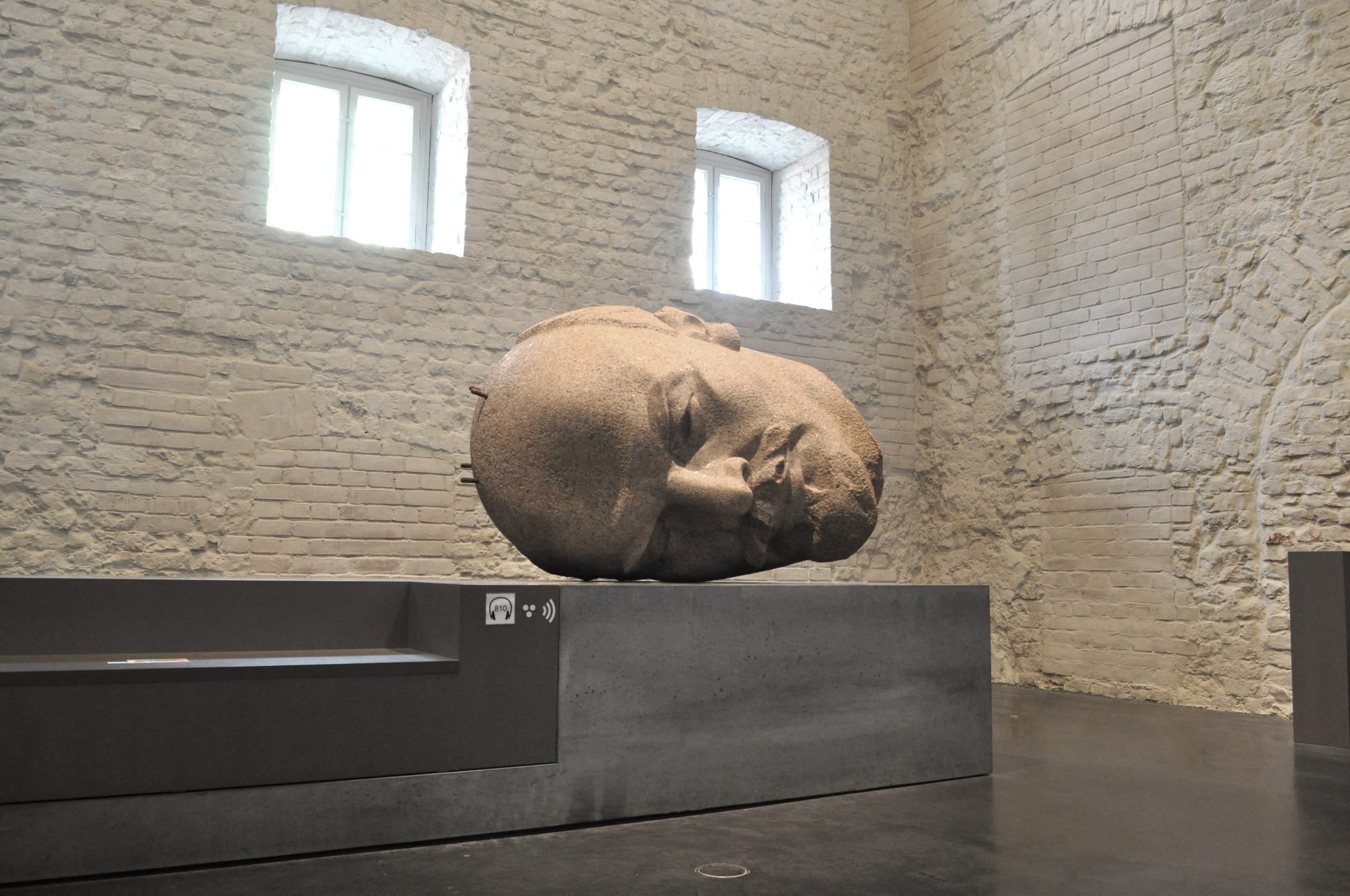
Nikolai Tomski, Head of the dismantled Lenin Monument, 1970. Courtesy of Stadtgeschichtliches Museum Spandau.
Many of the statues in Enthüllt were quite literally buried. The central three-tonne head of Lenin, for example, was dug up from its resting place in a forest at Müggleheim, where the entire statue had been buried in an effort to stop opportunists from chipping off mementos. The Puppelalle sculptures, too, were buried; likewise, the Nazi statue from Zehlendorf. Another recent addition to the collection (not included in the current display) is a Hitler bust, again unearthed in the backyard of a Zehlendorf villa. Here, we have what might be a particularly clumsy representation of the collective unconscious. In their burial, the objects were repressed. That the objects have been unearthed speaks to a conscious willingness to act against this repression, and integrate them within collective history.
***
For Evert and her team, Enthüllt demonstrates another purpose for decommissioned sculptures, something other than letting them stay ‘unkommentiert’ (unremarked on) in public space or leaving them to rot in the ground. [5] Rescued from the depths of history, they remain preserved in the museum space – which is to say, as objects of discourse. We enter the museum and start thinking about these objects, about the people who decided it was a good idea to erect them, and about who ‘we’ are now. I’m reminded of what the late Svetlana Boym said about a kind of remembering that remains connected to thinking; that is, an active, and not passive, process. ‘Remembering doesn’t have to be disconnected from thinking,’ as she put it, ‘I remember therefore I am, or I think I remember, and therefore I think.’ [6]
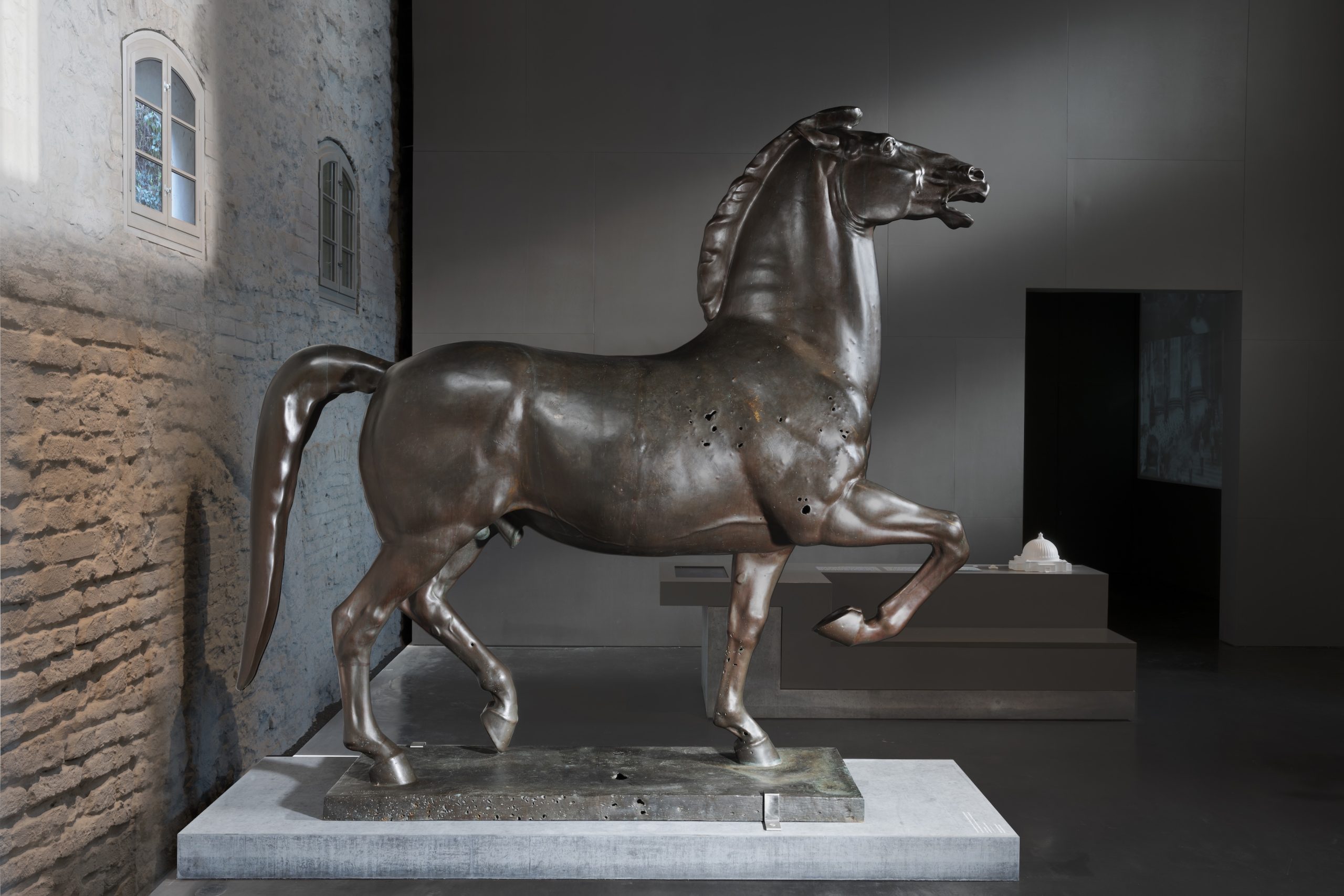
Josef Thorak, bronze sculpture from the group ‘Striding Horses’, 1939. Photo: Jannis Chavakis. Courtesy of Stadtgeschichtliches Museum Spandau.
But it is important to point out that these are not hallowed museum objects. They can be touched; you are allowed to clamber atop Lenin’s gargantuan head or even jump up onto that haunting Nazi horse, if you can. Mindful of the problem of re-exhibiting these monuments within any kind of public sphere, even a museum, we are invited to see them without heroising them. Better to show these problematic objects and discuss them, they say, rather than pretend they were never representative of German mores.
All in all, I think this is an admirable approach to take, and very much representative of the one Germany has been lauded for with respect to the horrors it committed under National Socialism – if not quite so much for the those committed on the African continent in the years following the Berlin Conference of 1884–85. There are limits to Germany’s ‘memory culture’. And, as events in Gaza currently show, is the German state can demonstrate a chilling and destructive lack of reflexivity when it comes to events of the present day. The will to defend Israel at all costs – what Angela Merkel once famously named the country’s Staatsräson – is like a monument no one wants anymore.
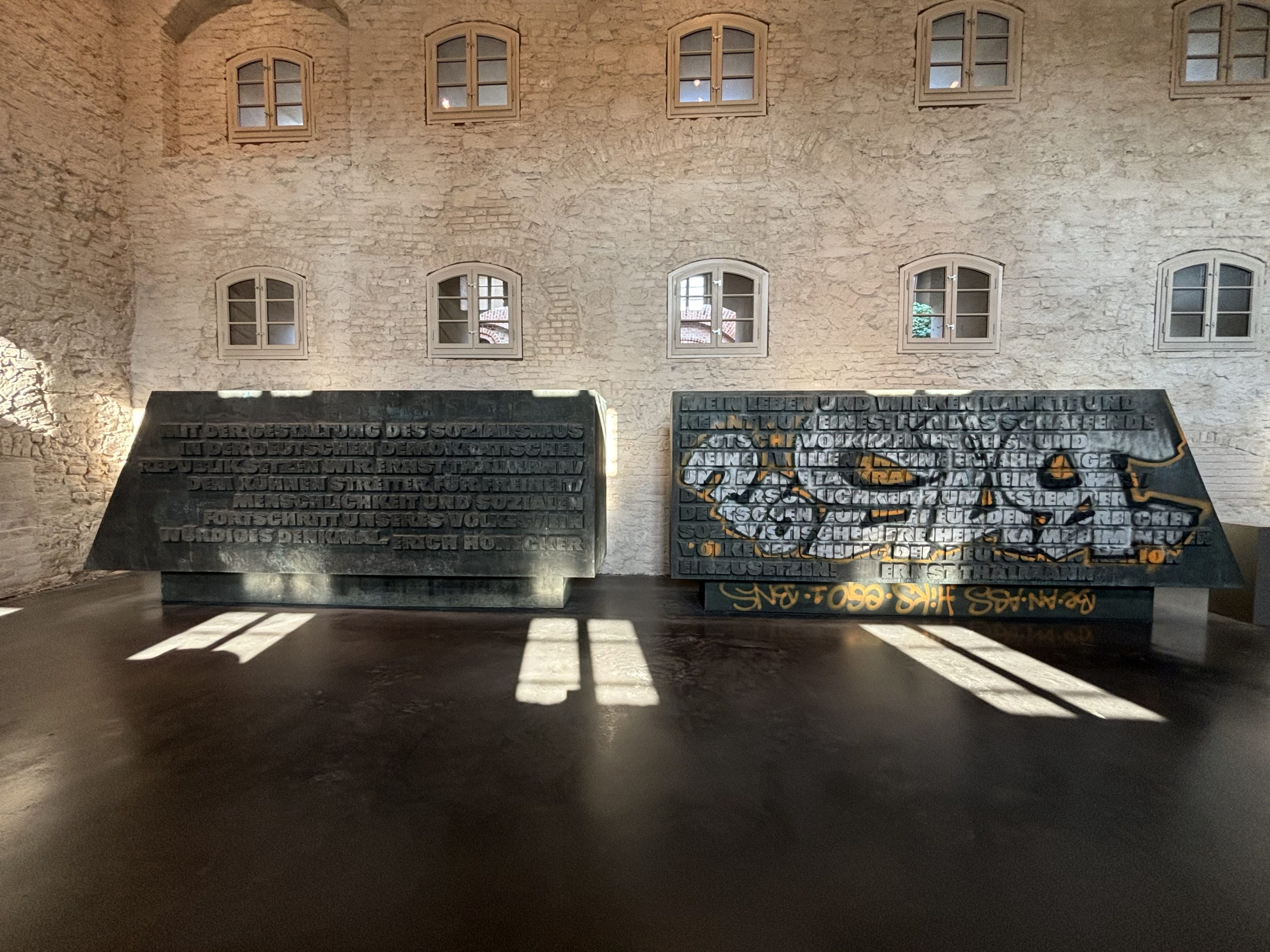
Lew Kerbel, steles of the Ernst Thälmann Monument, 1986. Courtesy of Stadtgeschichtliches Museum Spandau.
In authoritarian regimes, monuments are mainly there to heroise the leader and justify their continued power. But in democratic societies like Germany, or indeed Ireland, they – like actions committed by the state – should aim to function as expressions of public feeling. They are material embodiments of consensus, or the idea of consensus, if such a thing can ever exist. In reality, consensus is always fleeting and unstable. Perhaps no one other set of statues at the Zitadelle represents this quite so aptly as the pair of large stone tablets in the exhibition’s final hall. On the left, the words of former DDR Chairman, Erich Honecker; on the right, those of Ernst Thälmann, the leader of the German Communist Party murdered by the Nazis in 1944. After the fall of the Berlin Wall, the two monuments were removed from their home in Ernst Thälmann park in the former East area of Prenzlauer Berg. But because it was too heavy to transport, a huge sculpture of Thälmann himself still remains at the site. It is infamous for its grim Ost vibe – possibly you’ve seen pictures of it. In the wake of the Russian invasion of Ukraine, the sculpture came under renewed controversy due to its Soviet roots, with a call for it to be melted down and the money donated to Ukraine. Ultimately, this came to nothing, not least because the artist, Lew Kerbel, was Jewish and from Ukraine himself. Despite this, in 2022 the local council announced they weren’t going to be cleaning Thälmann anymore. At the same time, there were calls to fully restore the sculpture – reclaiming the parts formerly shipped off to Spandau.
In its unresolved back-and-forth, this disassembled monument seems to me a perfect embodiment of Berlin. Which is a cliché, but still true; I write this essay at a kitchen table located precisely where the Berlin Wall once stood. This is a city in which thirty years ago a Systemwechsel took place for some people, while for the others, nothing much changed. Such asymmetry can only produce strange results. What Enthüllt shows is that the past is something like a holding ground. Given the right circumstances, its imagery can be weaponised in the present tense. Some things are undoubtedly dead, while others may only be waiting for another, more amenable time.
Rebecca O’Dwyer is a writer based in Berlin.
This essay was originally published in PVA 16 – the Berlin edition.
Notes
[1] The exhibition’s title comes from the verb enthüllen, meaning to unveil, reveal or disclose, but in English the title is Unseen, which to me is curious by virtue of having precisely the opposite meaning.
[2] The one example, included here as a model, is the memorial to the thirty thousand Jewish people deported from the freight station in the western district of Moabit to the death camps in the east. While it is still standing on the Putlitz-brücke, it is one of the most vandalised monuments in Berlin.
[3] In 1993, the DDR memorial was replaced by a version of Käthe Kollwitz’s pieta-like sculpture Mother with her Dead Son (1938–39), enlarged four times by the German sculptor Harald Haacke. The sculpture still stands in the building, which is now the Central Memorial of the Federal Republic of Germany to the Victims of War and Tyranny.
[4] Amia Srinivasan, ‘After Rhodes,’ London Review of Books, 31 March 2016, https://lrb.co.uk/the-paper/v38/n07/amia-srinivasan/under-rhodes.
[5] Dr Urte Evert, ‘Führung durch die Ausstellung “Enthüllt. Berlin und seine Denkmäler” mit Dr. Urte Evert’, Zitadelle Spandau, YouTube, 17 June 2021, https://www.youtube.com/watch?v=juMtiYM7gWM.
[6] Svetlana Boym, The Future of Nostalgia (New York: Basic Books, 2001), 53.